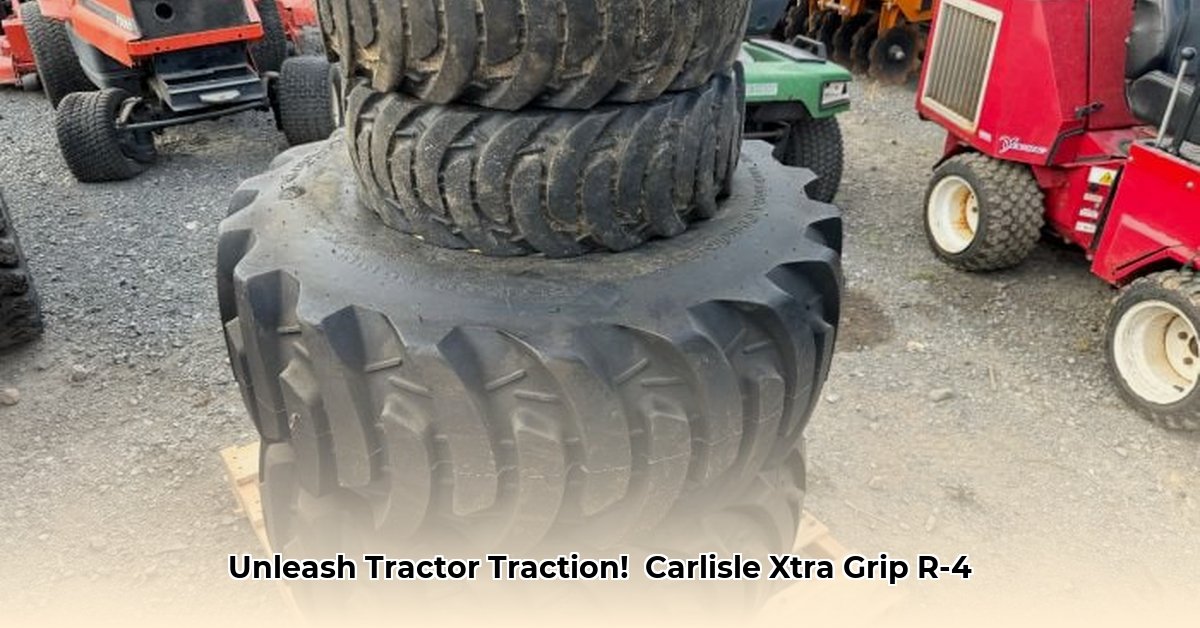
43x16.00-20 Tractor Tire: Carlisle Xtra Grip R-4 – A Thorough Review
Choosing the right tractor tires significantly impacts farm efficiency and operational costs. This review assesses the Carlisle Xtra Grip R-4 43x16.00-20, focusing on performance, durability, and comparative analysis, acknowledging limitations due to data scarcity. We aim to provide actionable insights for agricultural professionals. For more on tire weight, see this helpful resource on tractor tire weights.
Technical Specifications: Data Gaps Hinder Comprehensive Analysis
Securing detailed technical specifications for the Carlisle Xtra Grip R-4 43x16.00-20 proved challenging. While marketing materials highlight features like “self-cleaning traction bars,” crucial data points – including weight capacity, maximum inflation pressure, and precise tread depth – remain unavailable. This lack of transparency limits a truly comprehensive evaluation. Isn't it concerning that such fundamental data remain elusive for a major agricultural tire?
Performance Analysis: Traction and Durability Claims Require Verification
Marketing materials emphasize superior traction and durability. The self-cleaning traction bars suggest improved grip and reduced wheel spin, potentially leading to fuel savings. However, these claims lack independent verification. Long-term field tests are needed to confirm these performance characteristics and validate the claimed durability under various operating conditions. What independent research supports Carlisle's performance claims?
The Country of Origin Conundrum: A Critical Issue
Conflicting information regarding the tire's manufacturing location (Italy vs. USA) emerged during our research. This inconsistency is troubling. The origin significantly impacts supply chain reliability, potential import regulations, and warranty considerations. This lack of transparency undermines consumer trust. How can farmers confidently purchase a product with such contradictory information about its origins?
Comparative Analysis: Limited Data Prevents Direct Comparison
Direct comparison with competing 43x16.00-20 agricultural tires is hampered by the absence of comprehensive technical data for the Carlisle Xtra Grip R-4. A robust comparative analysis would require a side-by-side evaluation across weight capacity, tread wear resistance, traction performance in various soil types, and rolling resistance. Without these key metrics, any comparison remains speculative. Does the lack of readily available data suggest a broader industry issue regarding transparency in agricultural tire specifications?
Pros and Cons: Weighing the Evidence (and the Lack Thereof)
Advantages:
- Promising Traction Design: The self-cleaning tread pattern suggests potentially superior grip, particularly in challenging field conditions.
- Claimed Durability: Marketing materials indicate robust construction suitable for demanding agricultural applications.
Disadvantages:
- Severe Data Deficiency: The absence of precise technical specifications significantly limits a comprehensive evaluation.
- Conflicting Origin Information: Uncertainties concerning the manufacturing location raise concerns about quality consistency and supply chain transparency.
- Unverified Performance Claims: Without independent testing data, the advertised traction and durability benefits remain unsubstantiated.
Risk Assessment: Identifying Potential Challenges
| Risk Factor | Likelihood | Impact | Mitigation Strategies |
|---|---|---|---|
| Unclear Country of Origin | High | Moderate | Demand transparency from Carlisle; independent origin verification |
| Insufficient Performance Data | High | High | Independent testing by agricultural research institutions |
| Unverified Durability Claims | Moderate | Moderate | Long-term field trials; user feedback and case studies |
Conclusion: A Call for Greater Transparency
This review highlights the Carlisle Xtra Grip R-4 43x16.00-20's potential, particularly its promising traction design. However, the lack of detailed technical data and the conflicting information about its origin significantly hinder a conclusive assessment. Greater transparency from the manufacturer and independent verification of performance claims are crucial for informed decision-making by agricultural professionals. What steps can the agricultural community take to demand greater transparency in tire specifications?
Call to Action: Demand Accountability and Further Research
Farmers, agricultural organizations, and regulatory bodies should demand enhanced transparency from tire manufacturers, emphasizing the need for detailed technical specifications and independent performance testing. This will enable informed purchasing decisions and ensure responsible agricultural practices. This review serves as a call for industry-wide improvement in data accessibility and quality control for agricultural equipment.